
Boop the nose
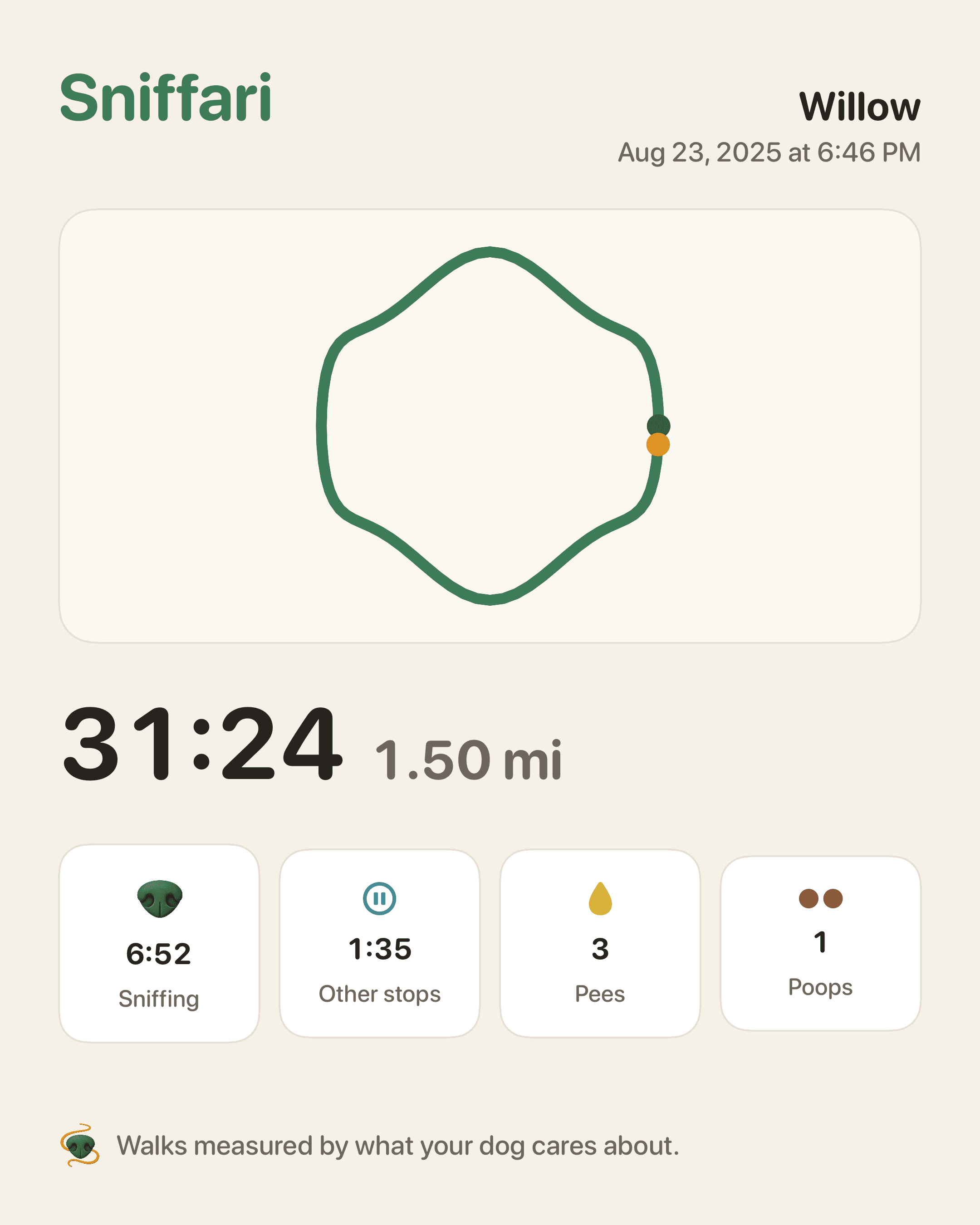
When the sniffing starts, boop the nose. Sniffari keeps the clock, and every walk shows how much of it was sniffing.
Walks measured by what your dog cares about.
Sniffari times how long your dog spends sniffing, counts pee and poop breaks, and maps the route — so a walk is judged by what it did for the dog, not by your pace.
In a 2019 study, dogs allowed to search with their noses became measurably more optimistic. Duranton & Horowitz, 2019
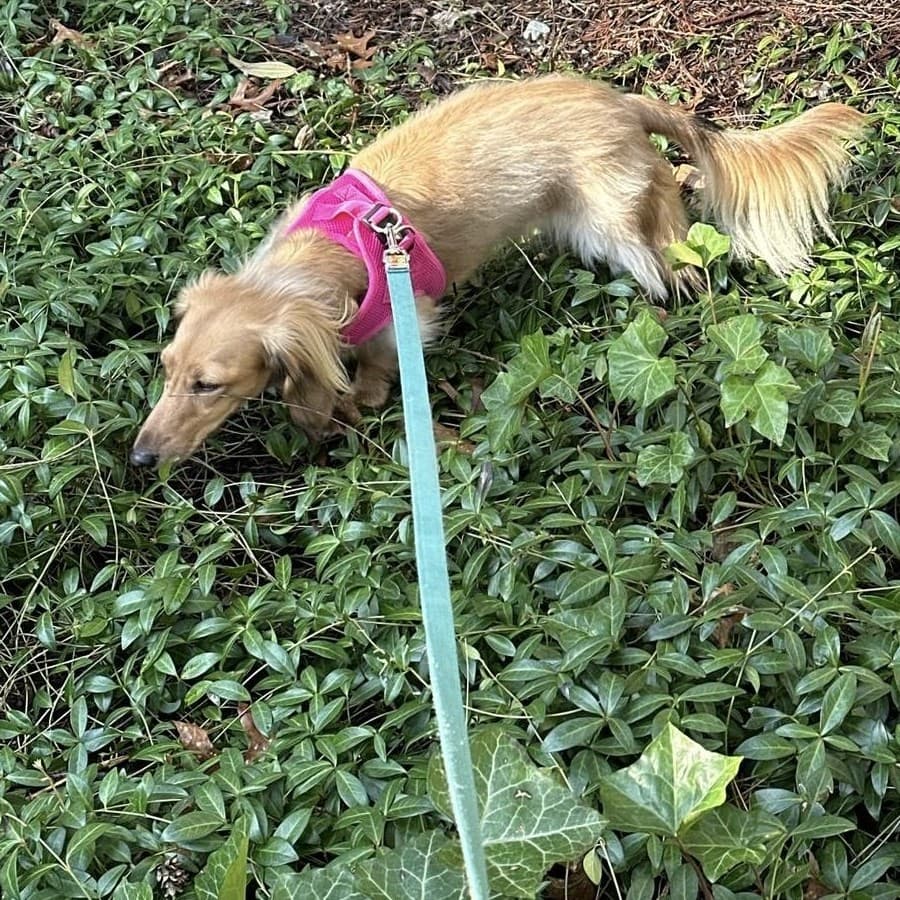
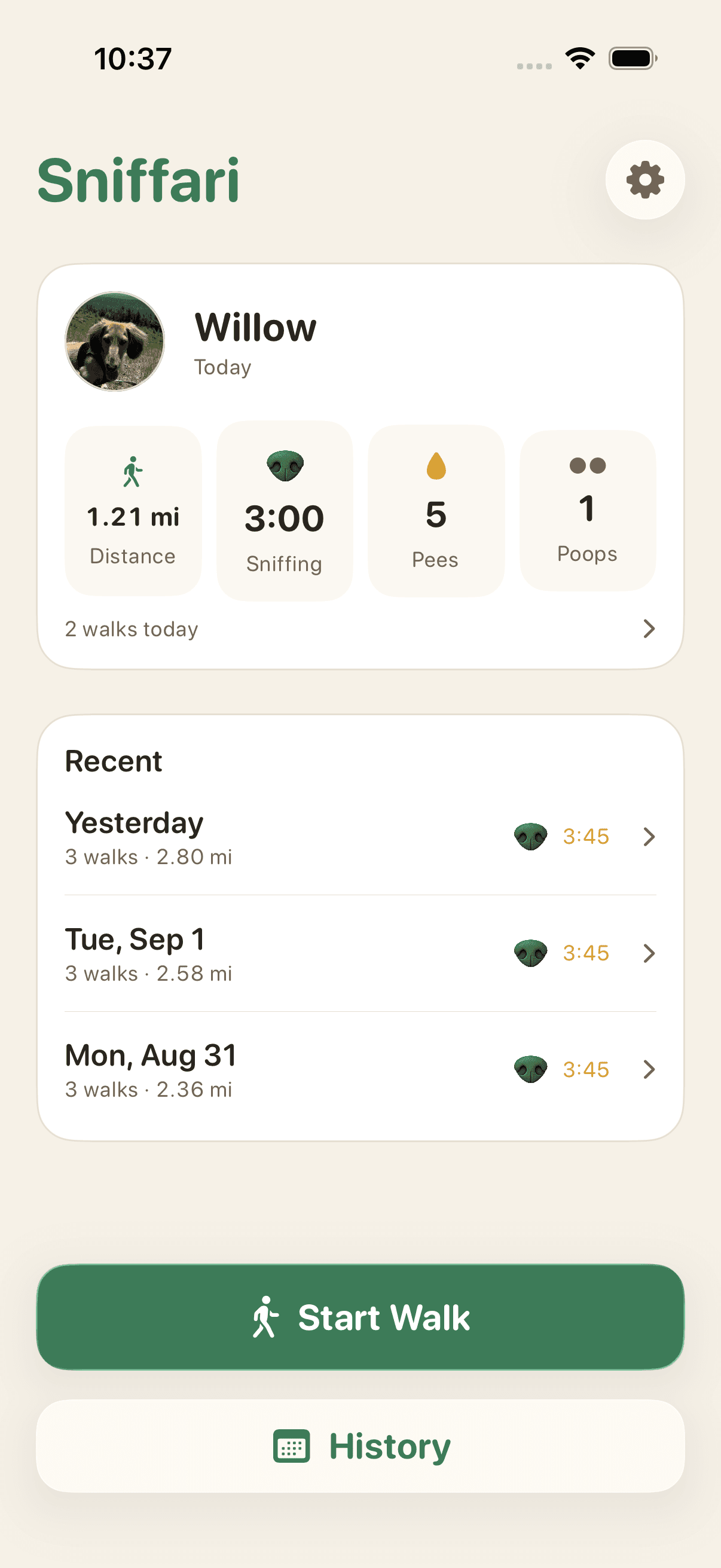
The sniff control is the nose. Boop it when your dog's nose goes down, boop it again when it comes up. The clock, the distance, and the pee and poop counts live on one screen you can read in sunlight with a leash in the other hand.
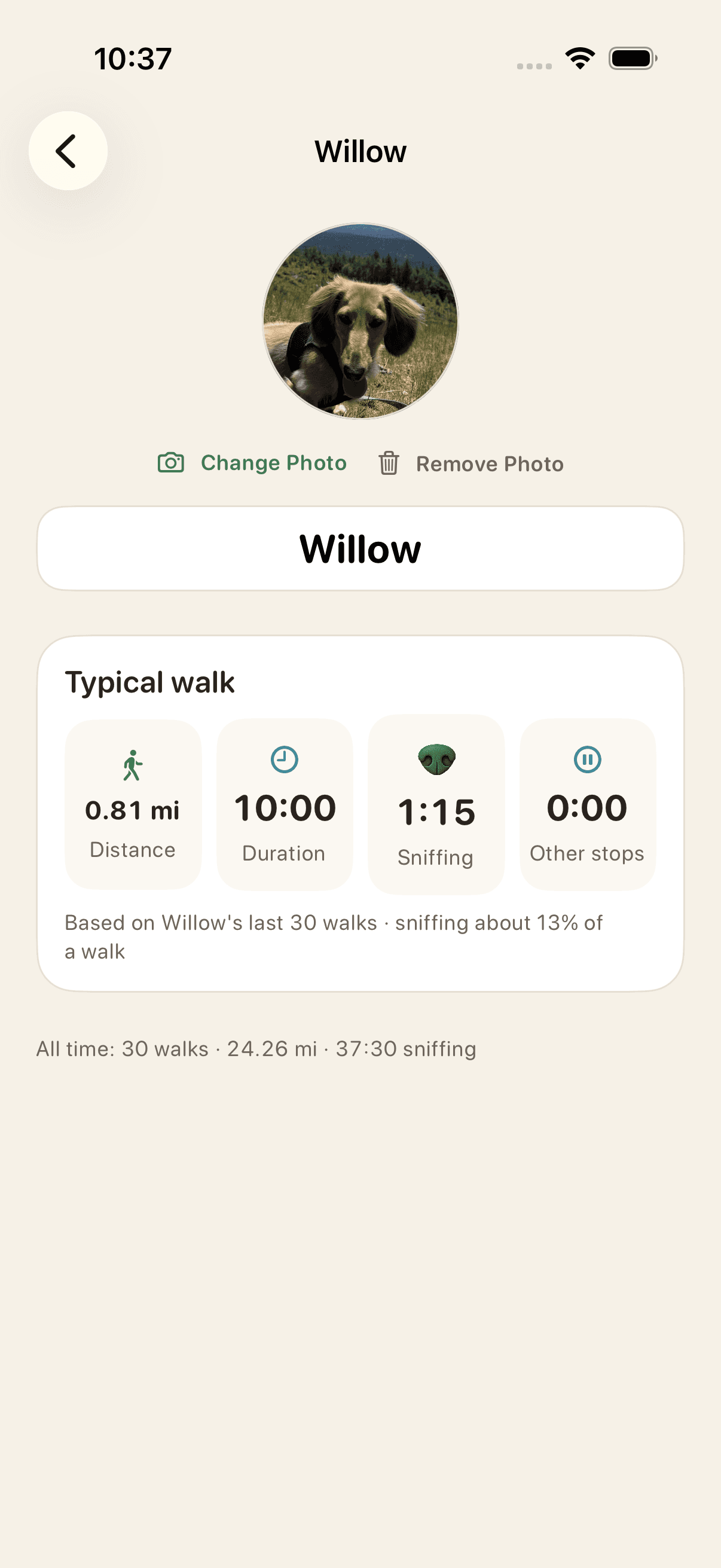
Every summary then says how much of the walk was sniffing, and once your dog has a few walks behind them, how that compares to their usual.
Don't want to boop? Sniffari also notices stops on its own. Whenever you stand still for more than a few seconds, that time is recorded from the GPS, so a walk where you never touch the nose still shows how much of it was spent stopped.
When the sniffing starts, boop the nose. Sniffari keeps the clock, and every walk shows how much of it was sniffing.
Counts on the walk screen, pins on the map, and a minus button for the accidental tap.
Two short walks and one long one add up on Home, so the day tells the truth even when no single walk does.
After a few walks, each dog gets a baseline. A summary can say “about 2 minutes more sniffing than usual.” Never a goal.
A map of where your dog sniffs most, sized by how long they linger. Analysis about the dog, not about you.
Start from your wrist, save walks to Apple Health, see today on the Home Screen, and keep your history on every device.
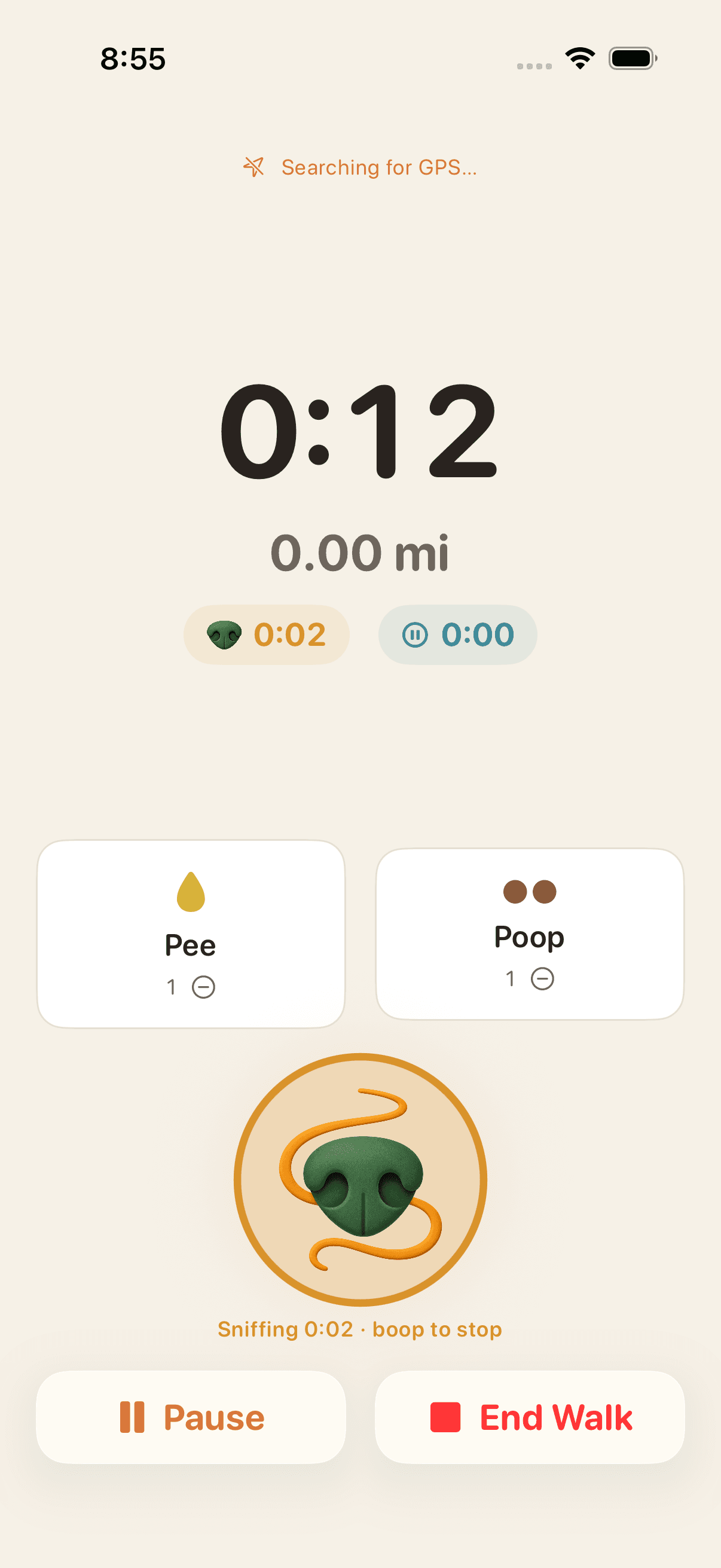
Sniffing is how a dog explores, and the research suggests it also helps a dog settle. Sniffari helps you notice and record that part of your walks. Here's what the research actually shows.
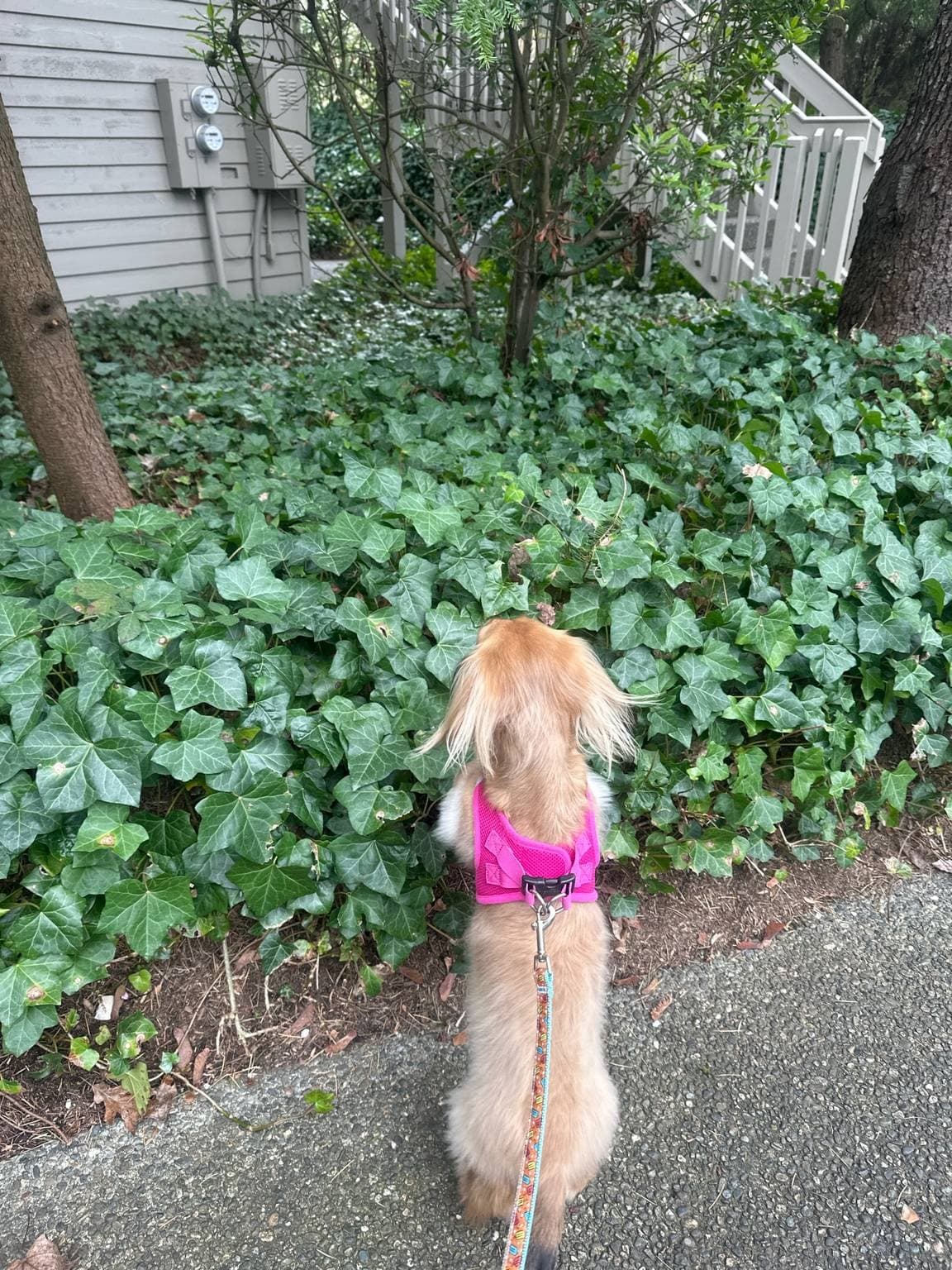
Dogs have on the order of 100 to 300 million scent receptors, against roughly 5 million in people, and can sniff many times a second. A sniff stop that looks like nothing to us is a dog reading the news.
PetMD: dog nose factsField study or secondary source — not peer-reviewed as far as we can tell.
One French field study measured dogs' pulse during walks and reported that the more intensely a dog sniffed, the lower its pulse dropped. A single unreviewed study, but it fits what trainers see: sniffing seems to help a dog settle.
Reported by the Animal Humane SocietyField study or secondary source — not peer-reviewed as far as we can tell.
Researchers split 20 pet dogs into two groups for two weeks. One group played sniffing games, hunting for hidden treats with their noses. The other did the same amount of walking and got the same treats, but had to walk at heel with no sniffing. Afterwards, the sniffing dogs were more hopeful: shown a bowl that might or might not have food in it, they went to check it out sooner. The dogs that hadn't been allowed to sniff hung back. Same exercise, same rewards — the only difference was the sniffing.
Duranton & Horowitz, Applied Animal Behaviour Science, 2019Peer-reviewed study.
What we don't claim: that sniffing extends life, treats anxiety, or that there is a right number of minutes. The app shows how much of each walk was sniffing and never sets a goal.
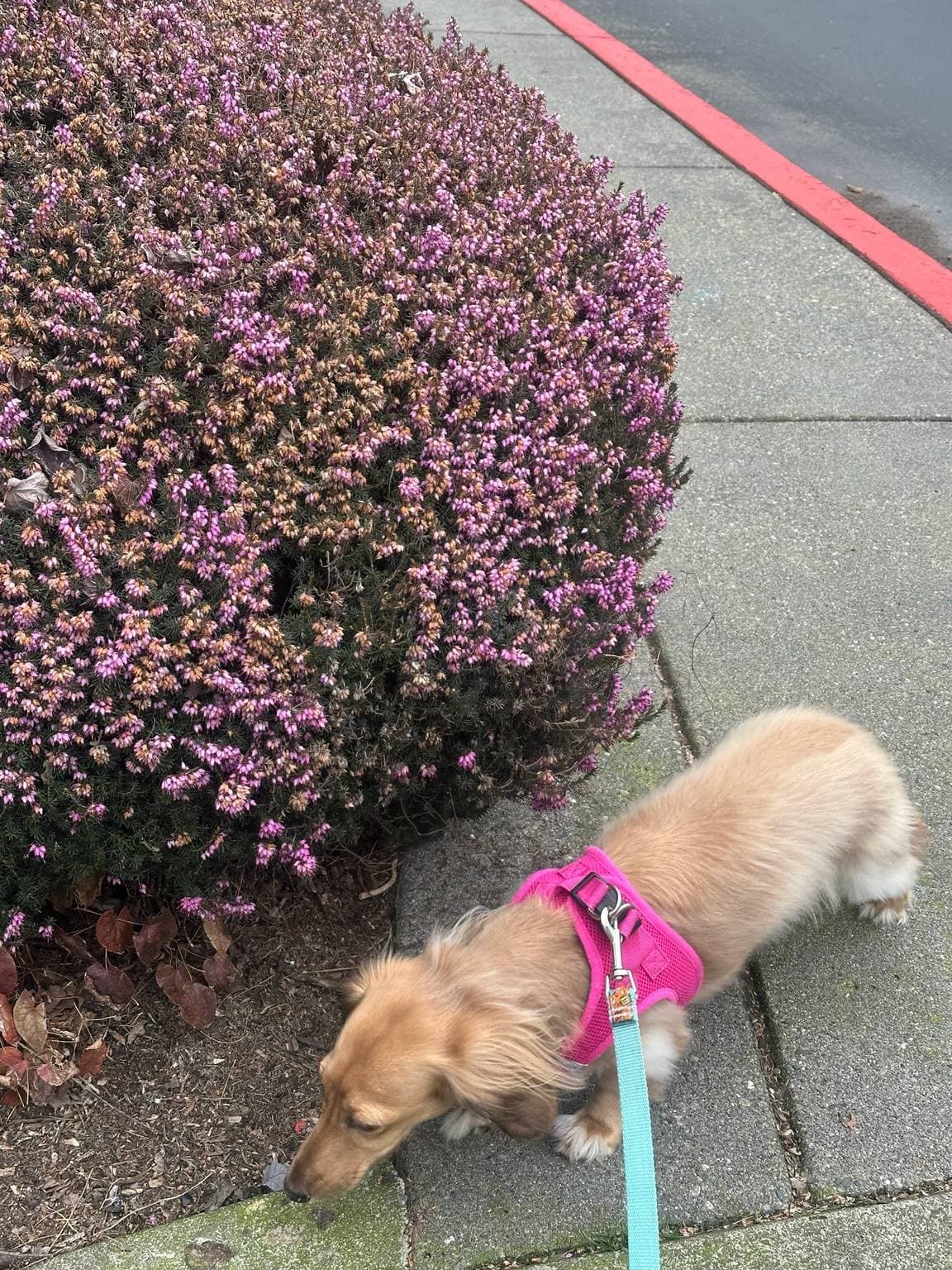
Every walk, from the dog's side.
Free
10 walks
Every feature, no card, no account required.
Premium monthly
$2.99 / month
Unlimited walks.
Premium annual · best value
$19.99 / year
Unlimited walks.
Your walk history is always yours, subscribed or not. Premium never gates what you've already recorded.
5% to rescue. 5% of what Sniffari receives from every subscription goes to Best Friends Animal Society. We publish what we gave each quarter here.